Native vs. Cross-Platform: Choosing the Right Mobile Stack in 2026
React Native has closed most of the gap with native — but not all of it. Here's how we actually decide, project by project, instead of defaulting to one answer.
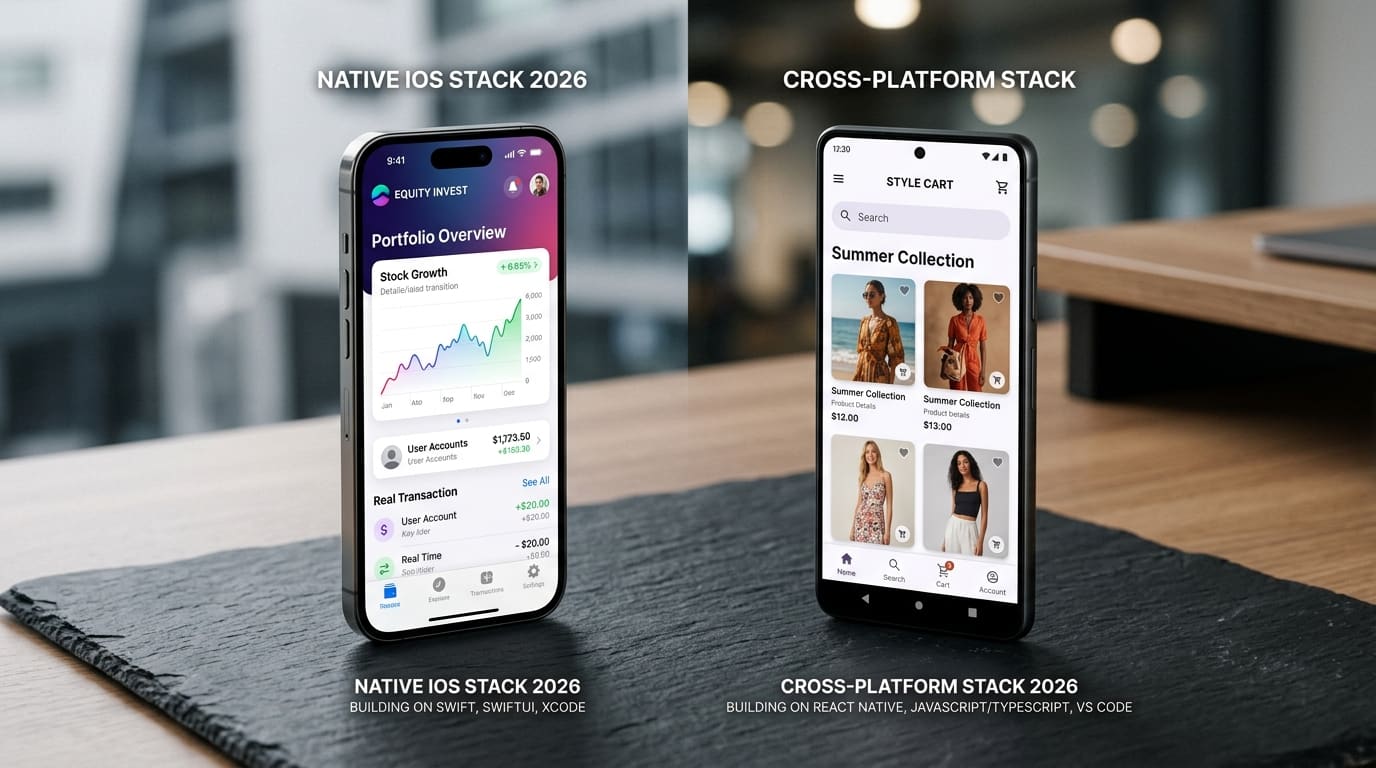
This question comes up in nearly every mobile kickoff call: should we build native or cross-platform? The honest answer is that anyone who gives you a one-size-fits-all rule hasn't shipped enough mobile apps to see where it breaks. We've launched both, sometimes in the same product line, and the decision comes down to a short list of real constraints — not a framework preference.
When cross-platform is the right call
A unified React ecosystem was the right choice for our Visa Management System client, and the numbers backed it up: a single team delivered consular web portals and applicant inspection views, achieving a 99.98% compliance SLA without maintaining fragmented parallel codebases.
When native still wins
The moment a product depends on deep platform integration — custom camera pipelines, background processing tuned to iOS's and Android's very different execution models, or hardware-specific performance — native still pulls ahead. We've watched cross-platform teams burn more engineering time working around a bridge limitation than it would have taken to write two native codebases in the first place. If your differentiator lives at the OS layer, don't fight the framework to get there.
The questions we actually ask clients
Before recommending a stack, we run through the same short checklist on every mobile engagement:
- Does the product need deep hardware or OS-level integration?
- Is team size or hiring speed a bigger constraint than raw performance?
- How much of the UI needs to feel platform-native versus brand-native?
- What's the realistic maintenance team size 18 months post-launch?
The stack is a means, not a badge
Neither approach is a signal of engineering seriousness on its own. The teams that ship durable mobile products pick the stack that matches their actual constraints, then hold the same bar for performance, accessibility, and release discipline regardless of what's under the hood.