Where AI Actually Pays Off in Product Development
Not every feature needs a model behind it. We break down where machine learning has genuinely moved metrics for our clients — and where it was expensive theater.
Every client conversation this year has included some version of 'should we add AI to this?' The honest answer is usually a question back: what decision are you trying to make faster, and would a person with the right dashboard make that same decision just as well? AI is a genuine unlock for a specific set of problems, and expensive theater for the rest.
Where it clearly pays off: forecasting from noisy signals
On the SLASSCOM award-winning Smart Fish Route Predictor platform, the win wasn't a flashy chatbot — it was XGBoost models that turned years of chaotic oceanic catch data and coastal auction records into actionable navigational route recommendations and auction price forecasts that fishermen and distributors could act on same-day. That's the pattern where machine learning earns its complexity: high-volume, noisy data where human intuition alone leaves massive money on the table.
Where it clearly pays off: anomaly detection
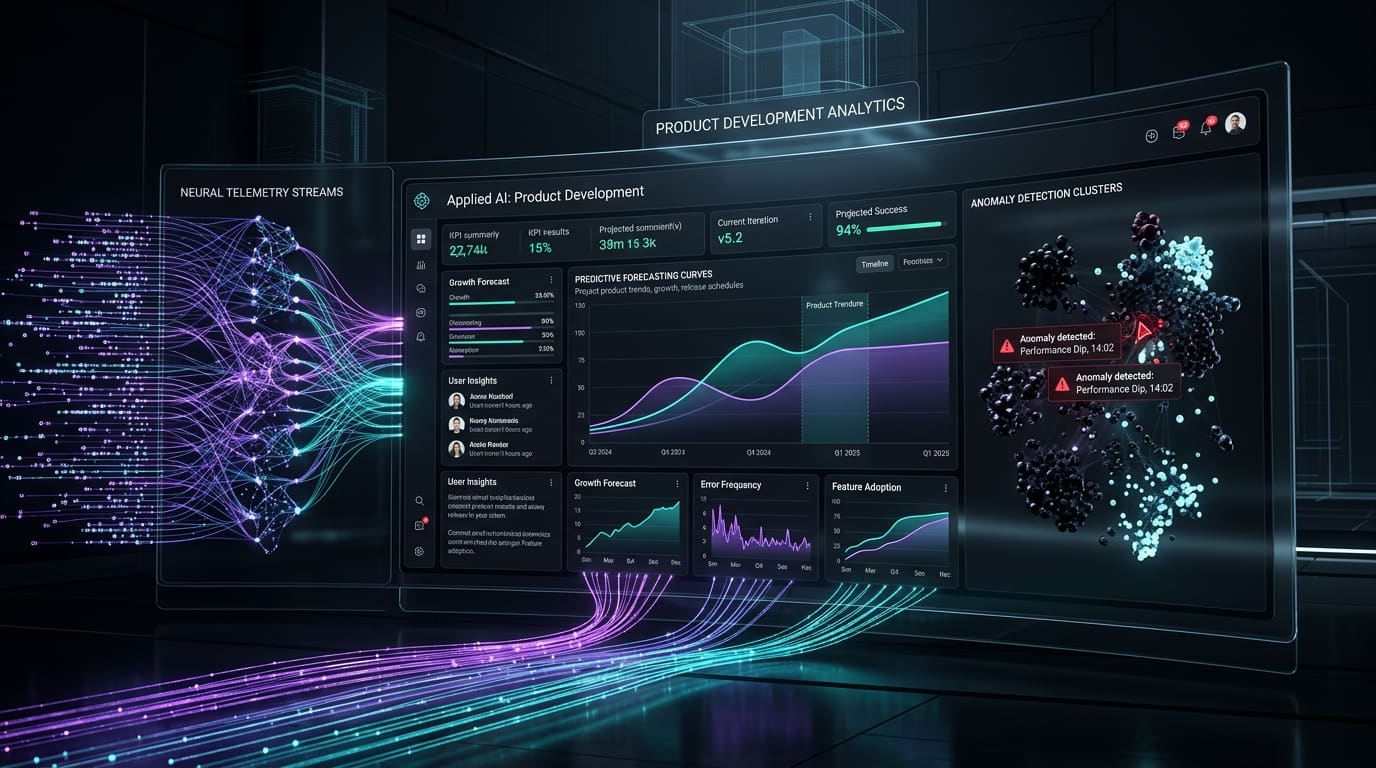
Fraud flags, unusual transaction patterns, infrastructure metrics drifting out of normal range — anomaly detection is one of the most consistently reliable applications of ML we deploy, because the model's job is narrow and measurable: is this data point unusual, yes or no. Narrow, well-defined problems are exactly where current models are most trustworthy in production.
Where it's usually theater: generic chat interfaces bolted onto everything
Adding a conversational layer to a product that already has a fast, well-designed UI often makes the task slower, not faster — typing a question is rarely quicker than clicking a button you can already see. We ship natural-language interfaces only where the underlying task is genuinely open-ended, like ad hoc data exploration, not as a default surface for structured actions users already know how to do.
- High-volume, noisy data that a human can't process fast enough — good fit
- Narrow, well-defined classification problems — good fit
- Structured tasks with a perfectly good button already — usually not worth it
- Anything where being wrong is expensive and unexplainable — proceed carefully
The question that matters more than the technology
Before any model gets scoped, we ask what the cost of a wrong prediction actually is, and whether the team can explain that prediction to the person it affects. That question — not the sophistication of the model — is what separates AI features that survive contact with real users from the ones quietly disabled six months after launch.